
How do you get a manager?
XYZ's Peter Van Steemburg explains what a manager actually does

Firstly, today’s interview is a long one, so I’m not going to go too deeply into the things I enjoyed this week.
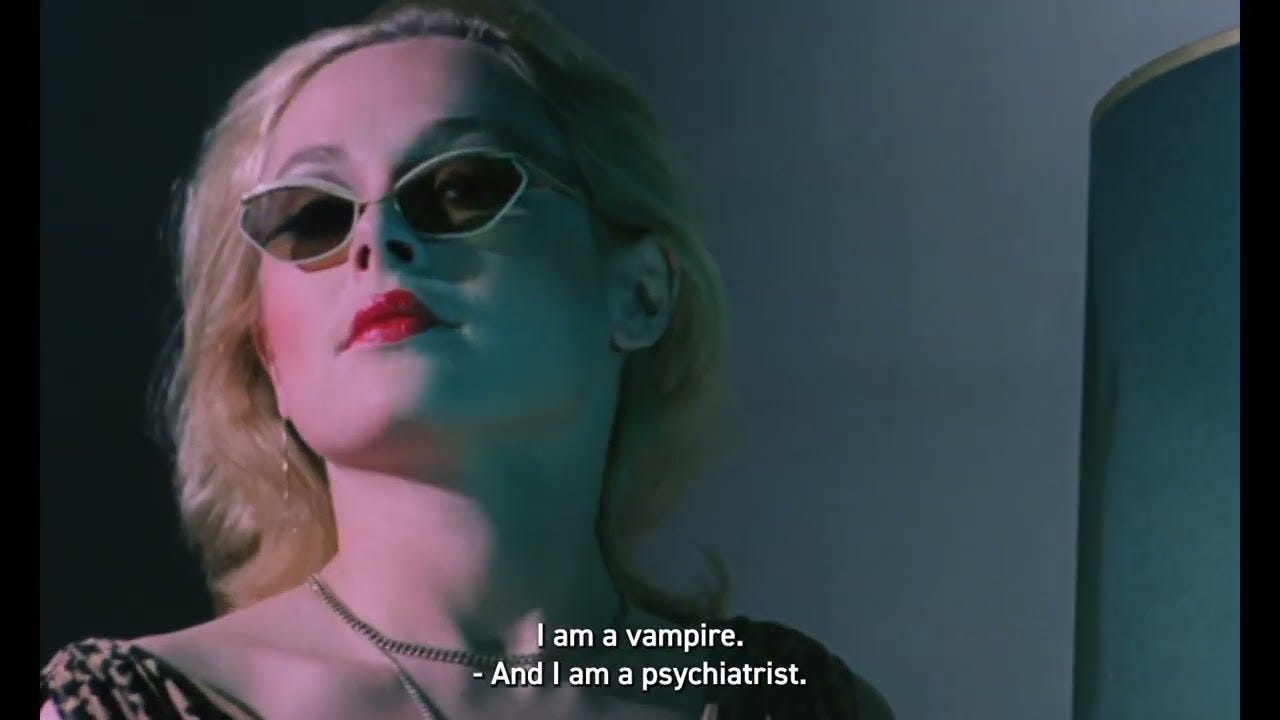
Just know that I Like Bats is one of my new favorite vampire films, and you can watch it as part of the House of Psychotic Women four-film release that Kier-la Janisse put out with Severin Films, along with Identikit, Footprints, and The Other Side of the Underneath. Honestly, I love all these films and could go on and on about them, but I’ll leave you with the fact that I Like Bats is basically a hot Polish vampire woman who falls in love with a psychiatrist and tries and fails again and again to convince him she is a vampire. It’s wacky and beautiful, and eventually I’d love to have an interview with Kier-la to explain her programming and curation process.
Secondly, a question I get from filmmaker friends all the time is: How did you get your manager? I’m pretty open about the great working relationship I have with my manager, Peter Van Steemburg at XYZ [a genre-focused production / sales/ distribution / management company], so I understand the question, but I also understand that it is many questions within a single question. What people really want to know is what a manager actually does, what they could do for them, if their current manager is good, and what they need to do to put themselves into a position for someone to sign them. Because Peter can’t push my work right now, because of the strike, I coerced him into answering all these questions for my newsletter. Not surprisingly, he had a lot more to say about the business, from all aspects of sales and distribution to the pitfalls and benefits of the current gatekeeping mechanisms, and how all these things work together to create the Hollywood industry.

If you’re just looking for information on how you can get a manager, you can skip down to that section, but I’d read it all if you have the time, because it’s a crash course in navigating the filmmaking business as a beginner.
You actually studied art history in school. Why that over film or business?
I wish I had a great story for you, but my mother and father had a passion for visual art—my mom more for art, my dad for history. In elementary and junior high, it was reinforced in our family. We went to museums and talked about art. My mother showed me a Matisse painting, and was like, How does it make you feel, what about the use of the color red. And I had a really great visual memory. Eventually, I was an actor and doing theater, and when I discovered filmmaking, I knew that wasn’t my skill set—I didn’t want to be a director, but I had a real connection to the visual side of it. I had a good memory for it. I could see a clip from a film, and I could name it. It was the same thing with art. When I was given an opportunity in high school of what I wanted to study, I would have chosen something that bridged that gap between curatorial and film, but I knew that I was going to go into some kind of entertainment field. I decided instead of studying film, it was an opportunity to have a base in something else. It’s also a personality thing. I was caught between two personalities. My mom was the freewheeling hippie, and my dad was like, Pick something functional. And for me, curation in general, it’s a little bit of both. I felt really comfortable in that.
You’ve had a varied career. How did you break into film?
My first job in the industry was at Miramax. I started in international sales and operations. As a kid in my early 20s, it was a dry part of the job, having to call up international distributors and collect box office reports. It was a desk job, but it was a great place to start, because it was about understanding the value of films in a marketplace and understanding buying and selling. I knew technically what a distributor was but not in a fundamental way. I wanted to get closer to the creative. A lot of people go the executive route. They want to be on-set producers. But you still want to get closer to the creative and decision makers if you’re in the corporate route like I was. A job opened up at Cinetic Media. They’d just done Little Miss Sunshine, Napoleon Dynamite, Supersize Me. At Cinetic was where I really learned about Sundance sales and distribution and the history of the business and October films vs Miramax in the ’90s. I had a real passion and love for it. A lot of it was luck, too. Like you couldn’t decide, Oh I want to be in acquisitions. It’s very limited jobs. There’s limited places to do it. The road is littered with distribution companies that didn’t make it, and then a job opened up at Magnolia, which I heard about through friends. I ended up there for almost 8 years.
“I always say to people that maybe it’s better to go with a lower advance from someone like Magnolia when you’re selling a film, because they’ll take care of your film, and those are hard decisions to make for a financier.”
Why are those companies failing?
Practically speaking, it takes a long time to recoup. You have to make sure you have a war chest. It’s probably a five-year run you need to be successful. Even if the movies make money, you have to be able to recoup until you’re getting consistent hits. It becomes a cash flow problem. You have to be able to sustain. You start with smaller teams. You outsource third-party. Take a look at the way A24 built their company. They really put their chess pieces in place and made strategic moves early on. They had the financial runway and that’s what you need more than anything else, a supportive financier. Magnolia is privately owned by mark Cuban and Todd Wagner, who were willing to stick it out. They’ve had a couple of misses, but you have to keep going. And I’m very biased, because I’ve worked with those guys, but I see the moves NEON has made, and they have some big wins, some that haven’t worked out, but they have sustainability there, and that’s what it takes to and get over a certain hump. Reliability is one of the most unsung heroes of distribution. I always say to people that maybe it’s better to go with a lower advance from someone like Magnolia when you’re selling a film, because they’ll take care of your film, and those are hard decisions to make for a financier.
Before you were a manager, you were an agent. How did you get into that from buying and distribution?
The agency thing I was lucky enough at that moment where Jessica Lacy at ICM [now at Range] had an attitude of What if we hire a buyer who knows the other buyers and can speak to that? So many agents start at agency and grow up within that universe. You start at a desk, get promoted, take on clients. For me, it came at a good time. I love Magnolia. I still regret even leaving sometimes, because it was the greatest job for me personally. But there’s a limitation of what you can do. My trajectory has always been advocacy for the arts. What I loved about Magnolia was being able to give those opportunities. But my toolkit was limited. I could buy a movie if my boss says it’s okay and only if we win at a market against other distributors. What I liked about agency, especially packaging and finance groups, there’s a big difference between knowing theoretically how a budget comes together and how money gets into escrow, and I wanted more ammunition to be able to do more. Even if I went back to distribution, I would know more about how these films come together. I would know how other buyers worked. The plan was if I go back to distribution, I’m going to have better relationships with the producers and filmmakers directly, because it’s more transactional when you’re in distribution. It’s different when you’re in the trenches putting financing together and going out there and being the advocate for a filmmaker through that process. It’s different when you’re in acquisitions. I wanted to be able to learn more to go back to distribution. And that just changed over time.
After ICM, you went to Universal, and then you went into management at XYZ.
Yeah, at the time, Universal wanted to build out the domestic side of their international home entertainment business, and this group out of London at Universal had figured out a way to compete for top-level projects. It was just the streamers and Sony who were the global buyers in the independent market then. I left ICM to go back into distribution, and it was an opportunity to be the head of acquisitions under a great executive and build out a team and do it at that level. Unfortunately, there were some growing pains. Working the studio side is often more of a long game, especially on the executive side, and part of it was my own impatience of working in a large studio setting—which I really enjoyed—but I wanted to do more, honestly. At the time, it was more that the opportunity was presented to me.
I heard about the job at XYZ through a friend at CAA. I had a relationship with Nate Boloton [XYZ co-founder], because I had bought films with him on the acquisitions side and co-sold films with him on the ICM side. I always really loved genre. I had not considered management at that point. I was quite nervous about it, given what I’d seen was demanded by literary agents and management. But it’s like when people talk about kids and say, “I don’t really like kids, but they’re different when they’re yours.” That’s what it was like early on. You were a big part of that. I was really introduced to your work by some friends, but mostly through your writing on Twitter. [This is so embarrassing to me.] You tweeted something when Black Christmas was announced about how you didn’t have any reps, and I didn’t have any clients… But XYZ, instead of hiring someone 60 clients deep—and honestly there’s more overhead to people who’ve done it for a while—they approached it as more speculative, an investment in a new challenge and perspective, and we were going to build it from the ground up. The things we don’t like about management, we don’t have to do, and instead of focusing on staffing opportunities for writers, we were focused on filmmakers and keeping it within the brand. International-focused, genre-focused. They knew my skillset was more in finding money, both in looking at distribution and traditional financing. Just getting films made. The philosophy was that we want to be a filmmaker-focused company, so if we’re managing filmmakers, there’s also no conflict of interest if they grow past what we can provide in management, because we can still help on the sales and other sides. I like that I’d be able to keep a foot in sales and distribution, and it benefits the clients.
“I think it’s industry standard to complain about agents and agencies. Yes, of course there’s negatives there, and a lot of the stereotypes are true, but what I ended up seeing was a lot of super hard-working, passionate agents, who cared deeply about the work and their clients, and I saw what went into it, but they have to navigate a lot of the politics.”
Also, when I went into management, you can read the tea leaves of the industry and see so much great material was happening in series and television—I’m not a genius for pointing this out. XYZ didn’t have a proper TV division yet, and I had not learned much about series work, and this was an opportunity to push myself in that world and build that rolodex. That was an added benefit, more producorial too. I’d topped out at agency. It was becoming very transactional. What I liked about management was also a cultural difference. I think it’s industry standard to complain about agents and agencies. Yes, of course there’s negatives there, and a lot of the stereotypes are true, but what I ended up seeing was a lot of super hard-working, passionate agents, who cared deeply about the work and their clients, and I saw what went into it, but they have to navigate a lot of the politics. But management was a different kind of cultural freedom, where people don’t poach clients, and there’s sharing of knowledge, and it was a little more personable. I’m better in a good-cop capacity.
Did you know day to day what exactly your job would be?
Yes and no. I’d never done it before, and there’s no training here, but I knew enough people on the management side that I respected and knew the work they did. Jerome Duboz had just gone over to management, and I had a lot of respect for him and his clients, and you meet other people that are in a similar zone from whom I could get support. I knew what I was good at. I knew I could help put a movie together. I understood the nature of packaging. What I needed to learn was more community-based, like how to sell a TV show, or how to pitch a studio-level spec project, but that was the purpose of coming over, to throw yourself into it. If I didn’t have that connection, somebody else did, and that’s been slow and steady, and then we ran into COVID, but I probably knew about 50 percent of what it turned out to be.
“Even though you’re told it can be a really personal, intimate job, it doesn’t resonate until you do it.”
What surprised you?
Even though you’re told it can be a really personal, intimate job, it doesn’t resonate until you do it. I became the first call for people, especially when COVID hit, for personal things in their lives. I think that as bad as it was in that period, it got me closer to the people I worked with and the clients. The new stuff was learning how the studio-level production company world worked in terms of development and speculative projects…that system of tracking. Most of my experience was independent financiers and distributors. Distributors on the studio side, too, with the mini majors, but I really wasn’t working with a company like Bad Robot or Monkey Paw. those were parts I needed to learn, the development side of things. It was a much bigger world than I knew going into it. It’s a catchall job. There’s a handyman aspect to it. Hey, I’ve got a leaky pipe, and I’ll come in and say, “Well I’ve never worked with this shaped pipe before, but I think I can figure it out.” There’s a little bit of that. It’s a lot of catchall. It’s a lot of problem solving.
I get a lot of people who ask me if they should get a manager, or they ask if their manager is good. It happens so often. What does your manager do for you? It’s a difficult question to answer, but I get it all the time. I know enough of the results of what you do—all the meetings and pitches I get—but I don’t actually know what you do.
It’s a really nebulous job. My read on it exists a little outside of the space, both because of my background, which is not traditional management and the fact that there’s nobody else at XYZ. But your manager should be, at the very least, setting you up on general meetings. My own perspective is that management never uses the word “publicity” when talking about what they do, but publicity is a massive part of the job. It’s talking about clients in a way that resonates. And that part is not ambiguous. I meet a development executive, they need to know about a client. It’s an introduction to material. It happens near constantly. That’s the number-one part of the job. The difference between and agent and a manager is that a manager is typically long-game, will come on board earlier. The only thing a manager could do, especially if you just maybe sold one script, is promote that with taste makers and people who have access to financing opportunities.
The second part is taking tangible steps to build out a team. By that, I mean I want to make sure every client who needs a lawyer, an agent, or a publicist gets that at the right time. I think managers are the best place to start, because that’s part of their core duties. Setting meetings ties into the publicity part of it. There’s obviously chasing jobs and chasing work, a huge part of it. it’s looking at material. It’s having someone ideally you can reach 24/7 to be able to go over larger strategic questions on a career. Right? I’m not saying I’m always right, but I’m talking to industry people constantly. It’s as simple and difficult as saying, “I have these five scripts, and I love them all, but what do you think is the easier to get made, and which should go next, and how should I be looking at my career?” Career advice, it can seem kind of ambiguous. I think day to day it makes a lot of sense. It’s like when you call and say, “Hey, I’ve got these projects, do you think we can sell this?” What I like is homework.
“My own perspective is that management never uses the word “publicity” when talking about what they do, but publicity is a massive part of the job. It’s talking about clients in a way that resonates.”
I think for a lot of people, whether writers or directors, but especially those based outside of Los Angeles, there are questions and things that need to get done. Sometimes it’s asking if a book they love is available or telling me about a Deadline article they saw to see if the producers might want to read a script. The mistake that a lot of reps make is making it about themselves. There’s an ego to it, where it’s like, If I can’t introduce you to this money, and if it’s not my idea it’s not a good idea. I love when someone catches an article and says, This is my favorite show, and I hear they’re doing series two, so is this something I can push. Part of that is constant communication. The gray area is a lot of clients want different things from management, and you try to provide that. Some people say, “I really want you to read everything I have.” Reading is another huge part of the job. But some people say, “I’d love for you to read this logline,” or, “Can you read this treatment?” And mostly on the writing side, a lot of people will say, “It’s not ready yet, I’ll show it to you when I feel like I have a final thing.” I’m always open to that, whether it’s looking at cuts of material, or written work, anything from short stories to novels. That is the core duty. A good manager should be reading your stuff and helping to advise, both creatively and practically, setting meetings, and publicizing your work.
“When I was at Magnolia, I clocked one year how many films we were looking at, whether we watched 15 or 20 minutes of something, or saw it at a festival, and it was somewhere over 2000 movies.”
What if your manager isn’t? Is it better to go out without a manager than with bad representation?
This is where it’s not black and white, and it depends on the filmmaker. It’s a community-based art form. If you want to make a film, unless you’re Vincent Gallo, you need capital and people. The way the industry has been structured is through a series of gatekeepers. There’s more people that want to do it than there are jobs available and more material out there than what can get made. One thing that agents and managers have done successfully is assist the flow of information. It’s terrible when they are an obstacle for that, but the idea is it’s the lifeblood of the industry. You’ve got development executives who want to read stuff, but if they have an open-door policy, they’d get inundated. it’s about time management. It’s almost better to explain from distribution angle.
When I was at Magnolia, I clocked one year how many films we were looking at, whether we watched 15 or 20 minutes of something, or saw it at a festival, and it was somewhere over 2000 movies. It was a wild amount of material. So you’re gonna start to trust those people that have taste and work ethic. A great manager or agent keeps a roster of people that is eclectic and diverse, so some of the A-listers help carry along the up-and-coming talent. People will say, “I really like this agent or this manager, because they helped put this film together, so if they pitch me somebody new, I’m open to it.” It doesn’t always work this way, but that’s how I wanted it to be. Also our clients really stand alone. So if I’m pitching a client, I’m not pitching 20 other clients to every project every time. To do that, you have to have a limited list and pay really close attention to making sure the work is dissimilar. I never wanted you, for instance, to feel that I was pitching someone else over you for a job. I always wanted to believe in my heart that if somebody else is pitching for a job, you’d say, “Oh I’d never want to do that.” It doesn’t always work that way. People might ask to see five or six people to consider for a project, but for incoming business where people say, “I love April’s work, I’d love to consider her for this,” I’m not going to pitch other people over you.
Good!
But back to your question. If you’re stuck with a bad agent or manager—and bad being a very loose term—part of it comes down to poor communication, from both sides. I would see a lot of agents who worked their tail off trying to get gigs, get money, and it wasn’t happening. The client will sometimes say, “My agent’s not doing anything for me, it doesn’t seem like anything is getting done.” And whether they agent is not talented or not calling the right people, that could be part of it. I’m sure there are agents who aren’t great. But then there are agents who super hustle, too, and maybe it’s not being communicated in real time.
“Managers just take a different tack, where you really have to fire your manager before you move on.”
I think at the very least, even if you have a manager who maybe you don’t totally get along with creatively, if they’re not being responsive to you… The one thing they should do is at least be responsive. If they don’t respond right away—like for me, it’s only because I legit can’t, but I will always try to get back to people and most managers are like that. Agents take on more work because of the nature of it, so I think traditionally most agents will take on more clients, and they’re more about negotiating those deals and doing fast work. Most people will say, “I don’t really talk to my agent,” but I think a lot of people would prefer to talk to their manger like once a week. But I get really nervous by people saying they’re gonna go it alone. Sometimes it works—you got something totally on your own.
Because a friend vouched for me.
Right. It helps to have a rep. Again, whether it’s a good thing or bad, sometimes it’s viewed as a negative if they don’t have a rep. People need to be really careful. With managers it’s trickier, too, if you want to move on. For agents, poaching is not a fully accepted practice, but it’s more possible. Managers just take a different tack, where you really have to fire your manager before you move on. I’m sure poaching happens, usually through personal connections. But people will lightly explore it with me, and I personally find it really uncomfortable. If someone says they’re leaving their manger and want to work with me, I say, “If you decide to leave your manager, let me know then.” I never mess with that.
“There’s a lot of people who ask me who I’m trying to sign at film festivals, but if you’re at a festival trying to sign people, then you’re doing it wrong. You should be signing the people well before they premiere at a festival.”
How did you go about building your client list?
At XYZ, they had an existing brand, and we knew we had a couple people already spotted. Early on, before we even announced, we looked out at the landscape and said, “Who do we really want to work with, who has worked with XYZ, who feels they’re right for what we’re doing?” We started small. It was six or seven people—you’re part of that initial group. So we put a lot of thought into that before we announced. If we announced at Toronto and said, “We have a management division with no clients,” it would put us on our back a little bit. We wanted to be like, We are legit, and we’re coming into TIFF with projects and clients to pitch. I’m very lucky with clients, though. A lot of companies have asked how we found these filmmakers—I’m really proud of our filmmaker list, especially because a lot of them like to work together—but I really rely on my sales team, because we are one of the few domestic sales companies. We have a viable international sales company, too, but outside of the agencies, it’s really just Submarine, Cinetic, and us. There’s not a lot of companies that focus on US sales like we do. We have a niche, which is a lot of international-skewed genre, and it allowed me early access to great talent. So one of the reasons we found Egor Abramenko, for instance, is we saw his film Sputnik early. We knew the film was gonna be at Tribeca, and they were looking for sales agents, so we picked him up. I work within an organization that is not only a viable production company so we get introduced to a lot of talent through that end, but we also have the sales side. Funny enough, Anonymous Content, now with Nick Shumaker and Bec Smith [my wonderful now-former agent], who were great agents and now great managers. My old boss is at Range. Those management companies are growing into more formidable forces on the sales and packaging side. That’s been how I’ve been able to find a lot of writers and directors at an early level.
“Managers will come on board earlier than agents, but they’re still gonna look for some foothold in the business.”
Also I have Todd Brown [XYZ’s Head of International Acquisitions]. The short answer is Todd Brown works here. And Pip Ngo [XYZ’s VP of Sales and Acquisitions] and Alex Williams [XYZ’s Manager of Acquisitions and Development]. Everyone does acquisitions here. There’s a lot of people who ask me who I’m trying to sign at film festivals, but if you’re at a festival trying to sign people, then you’re doing it wrong. You should be signing the people well before they premiere at a festival. That’s how I got Mattie Do (The Long Walk) and Jacqueline Castel (My Animal). You’re the only one who’s different, because Alex knew your work, and we had friends of friends. But I knew your work as a journalist and podcaster, and when you tweeted you were looking for a manager, that was a little unique. Usually the tips come from internally.
When people ask me how I got my manager, I know it’s in a way I don’t think anyone else would be able to. And you’re confirming that for me lol.
Look, different managers look for different things. Most managers do look at short-form work. Having a great short that plays in a major festival. Managers will come on board earlier than agents, but they’re still gonna look for some foothold in the business. It is very rare for any manager to pick up somebody that’s totally cold, like, I’m just out of school and I wrote this spec. It’s great to win writing awards and to publicize your work, but there has to be some move where some work got produced. It has to start there. This is my least-favorite question. It’s almost impossible to answer. It’s like dating, where it’s like, Yeah you can use the apps and someone introduces you. At the end of the day, you meet people. There are things people can do to put themselves in a better scenario, though.
“After TIFF Midnight Madness is announced, the very next day we would reach out to [TIFF programmer] Peter Kuplowsky and ask, ‘What didn’t get in that you loved?’”
They can move to an area that is more advantageous for meeting agents and managers. If you are a great writer living in Denver, you can have a sustainable career. But you’re probably going to find an agent or manager faster if you’re in Los Angeles, New York, or London. Another thing is to get something produced on the short-form side, whether that’s something you finance yourself or a rich uncle does, it’s gonna be key. Early on, we said we were gonna focus on filmmakers and people who had a first feature under their belt, but I’ve totally blown past those rules. Like you hadn’t directed a feature film, but I knew you wanted to, and your writing was undeniable, so it was obvious. Same thing happened with Carlota Pereda. I saw Piggy the short and was like, Oh no one would challenge the value of this film and the technique of the director. It does start with something. You’d had a studio film produced. Carlota had won the Goya. That, again, is going to be different for every creator, but you have to show that something you had had validation, even through a minor gatekeeper. Your short doesn’t need to get into Sundance. It could be in the Palm Springs Film Festival. And I don’t think a lot of people think about what their personal artistic brand is and what they want to be putting out there. You did. You had a podcast, a journalism background, connections were quite deep. It’s the community you’re with, and those are the other things I would consider.
It still seems so difficult to get reps, even with multiple avenues.
What people want to hear is there’s this great website, and all the managers check it out, and all you have to do is send your stuff. That doesn’t exist. And the way you’re going to get a rep is certainly not cold emails. It’s not cold calls. My job is like an advocacy job, but I also look for other advocates. For me, outside of the people at the company looking for talent, the other great resource is festival programmers. After TIFF Midnight Madness is announced, the very next day we would reach out to [TIFF programmer] Peter Kuplowsky and ask, “What didn’t get in that you loved?” Programmers are seeing way more. Same on the distro side. I’m lucky in that we also are very internationally focused, so you’ll find a lot of great directors working their tail off, and they just never had a US rep. It’s more Darwinian here in the US. It can be more challenging to get things made. That’s what gives the Americans a positive side, the pioneer spirit. For international filmmakers, if their small country film institute doesn’t support their film, then it might not happen. And not every country is supportive of genre [action/horror/sci-fi, etc.] in the way we are. That’s another thing we have going for us over here. There’s a hustle on the American side.
“I think some people like the rigidity of having a set call with their manager to go through agenda items.”
So just keep hustling, I guess. Can I ask what you’re actually doing on a day-to-day basis?
Every day is very different. There’s often some kind of emergency, where it’s like, Ok we’re going into production and we have issues there, closing a deal or something. But typically I come in, catch up on the trades, catch up on the world, not just film news, because we’re affected by the global economy, so I’ll check to see what’s happening. We usually do internal meetings. I participate with every group here, so there’s a content group meeting, where all material comes in and is dispersed. That’s where I’ll hear there’s an open writing assignment, directing assignment. There’s a separate pipeline meeting for films that are in production. From about 10 to 11, I’m inundated with emails, and they usually mean sending projects out or receiving responses, and scheduling meetings before people break for lunch. It’s also when I can call my international clients. Earlier today, we had a meeting to talk about our Toronto schedules, making sure we’re all aligned with what we’re pitching. Then probably three days a week, I have a lunch meeting with a producer, financier, agent, or fellow manager. People on the executive side. After lunch, it’s a catchall. We had a cut of Flying Lotus’ film Ash come in, so we had to make notes on that. We have enough clients on the management side, where there’s always something going on. Like right now Egor is about to start shooting his next film, and we need to make sure his deals are all closed, the SAG waivers are covered. Then there’s a couple of set calls. With some international clients, I can’t reach them as readily as I can just text you, so I do weekly calls around that time. I think some people like the rigidity of having a set call with their manager to go through agenda items. Sometimes I’ll track down the rights to a book, or I’ll talk to a lawyer about a deal, or I’ll reach out to somebody who hasn’t paid the client yet. And I get out of here at 5:00 to see the kids, eat dinner, and the nights are reserved for reading and screening films. I don’t know. Does that make sense?
No, but yeah. It seems like a lot. From my side, it’s me sitting in bed, writing my dumb stories, texting you about bad chiropractors and people growing extra sets of teeth.
I get a ton of calls. Especially when someone pops, because everyone is sending in scripts and projects for them. I don’t hold anything back from my clients, even if I think it’s gonna be a pass. There’s a lot of that. When I wake up in the morning, I have anywhere from 50 to 100 unread emails. Since we’ve been talking, I just got 40.
So we need to go.
Well… I like a big fat NO UNREAD EMAILS in my inbox. I used to be the kind of person who would file every single email away. Now I have a file that’s combined creative and business for every client. Yours is totally chaotic, which I thought you’d appreciate, but I have everything in here. I keep a separate email inbox for important emails, so if I get an email from an executive saying, “We’re 100% in on April, and we think the budget will be this,” I can’t keep that in my head, so I throw that in your folder. Everything else, I use my inbox as a to-do list, so if there’s something in an email I can’t do at the moment, I’ll use the flag system, but I need zero unread emails. I get back to the clients fast, but sometimes two days will go by after someone emailed to ask if I liked something, and I know I have to get back to them.
Some of us send you… a lot. [cough cough]
I wish I had more bandwidth to do more outward tracking, so I’m pitching people for series work, but more often than not, the people I’m working with, you included, I’d rather be pitching your pilot. There are things you can chase. But we focus on the filmmakers. The good TV comes their way, because people want to work with them. I believe people make their names on the film side, and television chases them. TV frustrates me, but what I find interesting about television is that it can keep people employed. How many TV projects have you worked on where you’ve made pretty good money and the thing doesn’t get produced? I know it happens in features, too. But TV you need the end user... Are you learning anything here? Is any of this surprising to you?
“I’m not necessary. Nobody needs me to make a movie, and I think it’s good for reps to keep that in perspective and know where your value is and then do that thing as much as and as well as you can.”
Well, I didn’t know how little experience you had on the management side when I signed with you, but I was more interested in working with someone who aligned with my creative sensibilities, which can be admittedly… weird. I had had bad experiences, and I wanted to work with someone I liked.
I try to approach it from a position of understanding and kindness, because when you’re in an agency in particular and been doing it for a long time, it’s very easy to get cynical about stuff. You’re giving more bad news than good, and it can feel internally like all you’re talking about is your position or perspective in the industry. You haven’t written a script or produced a movie as a rep, so everything about that process starts to annoy you, because it’s slowing down your day, and there’s so much work that comes through, and pressure and politics… It’s very important to know that this is not the most important part of the industry. I’m proud of my job and want to do a good job, and it’s important and meaningful, but it’s not necessary. I’m not necessary. Nobody needs me to make a movie, and I think it’s good for reps to keep that in perspective and know where your value is and then do that thing as much as and as well as you can.